
Solar Battery Storage
Store the energy your panels generate by day and use it when you actually need it. Independent advice on whether a battery is right for you, with a clear payback calculation and no pressure to buy one you don’t need.
- 25yr Performance Warranty
- Manufacturer-Independent
Use More of the Energy You Generate
Without a battery, solar panels only save you money while the sun is up. The power you don’t use in the moment gets exported to the grid, often for a fraction of what you’d pay to buy it back that evening. A battery flips that: it stores your surplus during the day so you can run your home on your own energy after dark.
For households that are out during the day and use most of their electricity in the evening, that shift can dramatically increase how much of your solar you actually benefit from, sometimes from around a third to well over two-thirds.
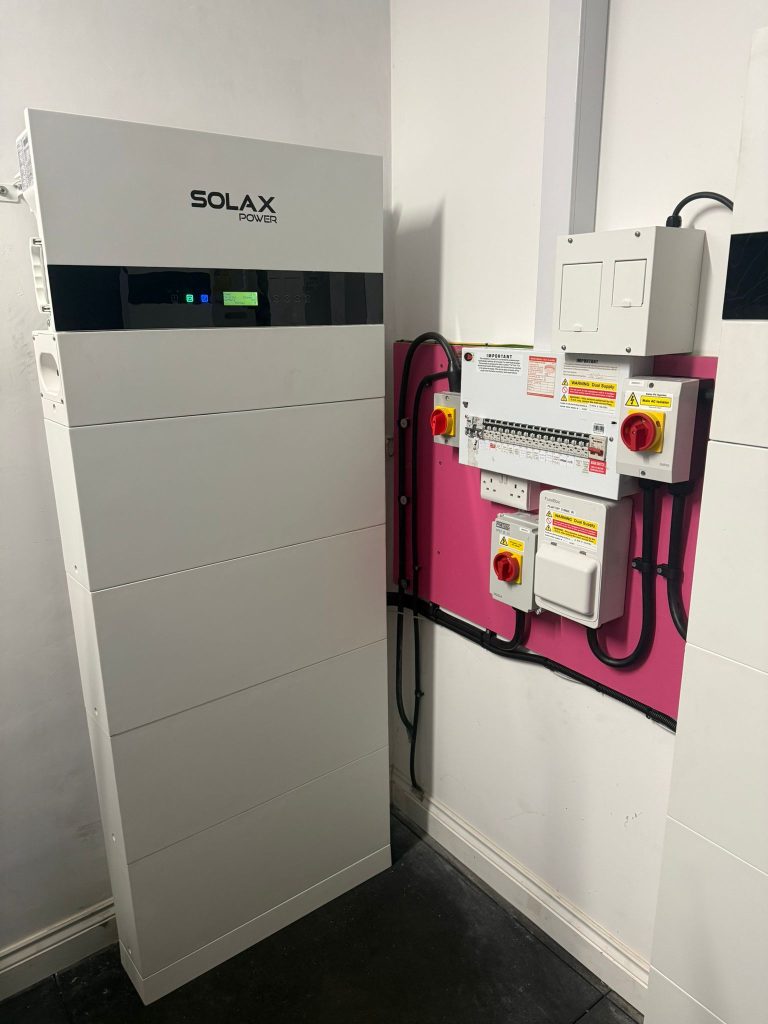
A Battery Isn't Right for Every Home
Here’s the honest part most installers won’t tell you: a battery doesn’t pay off for everyone. If you already use most of your electricity during daylight hours, or your tariff doesn’t reward storage, the numbers may not stack up.
That’s exactly why our independence matters. We’re not contracted to shift a particular battery brand, so we’ll run the actual figures for your home and usage, and if a battery won’t earn its keep, we’ll tell you straight. You’ll get a clear payback calculation either way, not a sales pitch.
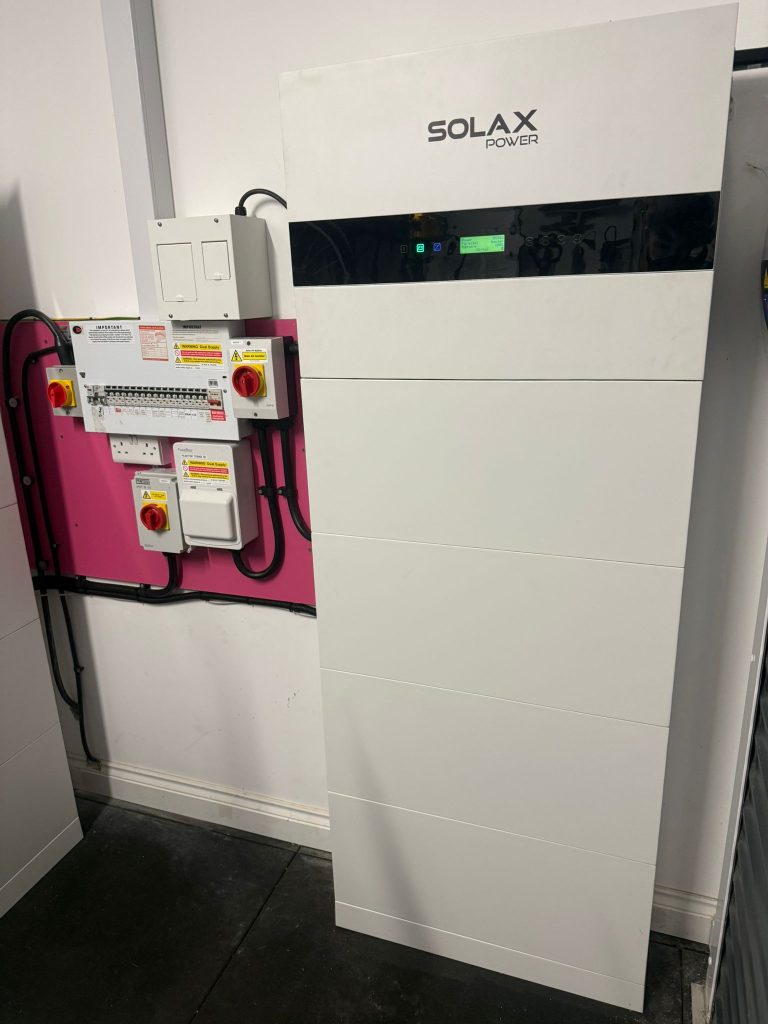
Add a Battery Now, or Later
You don’t have to decide everything at once. Many homeowners start with panels and add storage later as budgets allow or tariffs change, and a well-designed system leaves room to do exactly that.
If you already have solar, we can retrofit a compatible battery to your existing setup, whoever installed it. And if you’re planning from scratch, we’ll design panels and battery to work together from day one. Either way, you get Tier-1 equipment, clear pricing, and a system built around how your household genuinely uses energy.
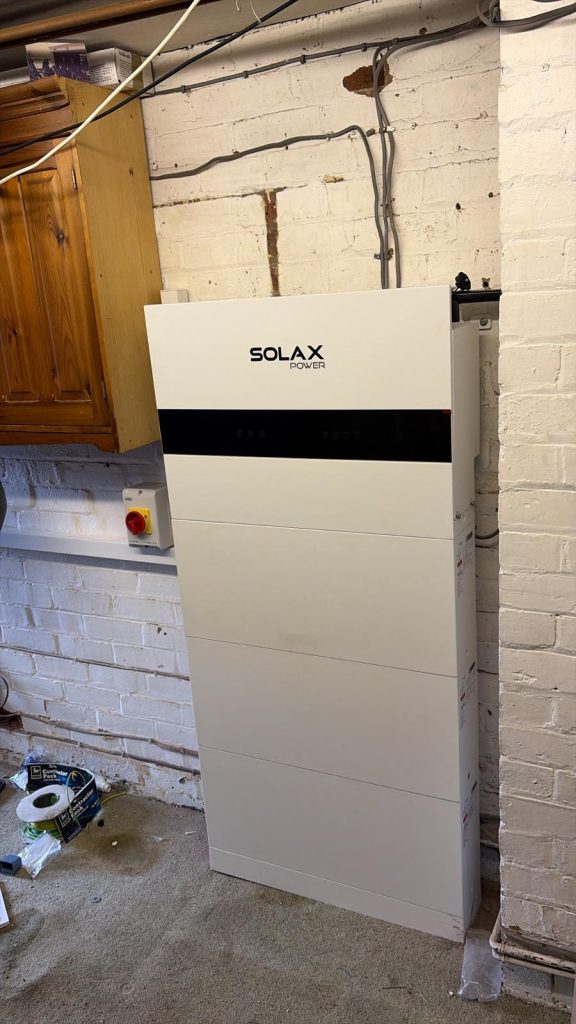
How Do Solar Batteries Work?
From your roof to your evening kettle, in four simple stages.
Panels Generate
Your solar panels produce electricity through the day, powered by daylight rather than direct sun.
Your Home Uses First
That energy powers whatever you're using right now, before anything else happens to it.
he Battery Stores the Rest
Instead of exporting your surplus for a low rate, the battery banks it for later.
You Draw On It After Dark
In the evening, your home runs on stored solar instead of expensive grid power, and any spare can still be exported for credit.
Understanding the kit means you can ask the right questions and spot a bad quote.
Stores daytime power for evening use. Useful but not always necessary. We’ll show you a payback calculation before suggesting one. some homes are better off without.
Converts DC to AC. The most likely component to fail over 25 years. so we’d rather fit a quality string or hybrid inverter than the cheapest option to inflate margins.
Where electricity is generated. Look at efficiency (%). wattage and the product warranty. not just the price per panel. We work with several Tier-1 manufacturers and recommend based on your roof.
Tracks generation; usage and savings in real time. Comes free with every install. so you can verify the system is performing exactly as quoted.
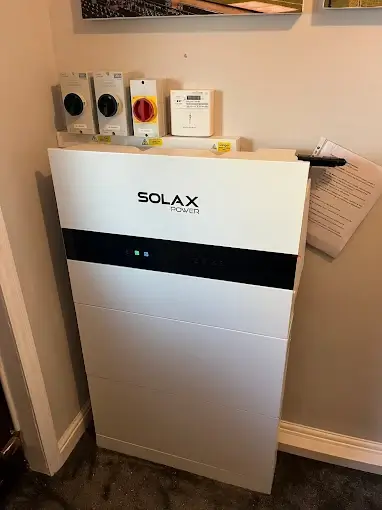
Backup Power When the Grid Goes Down
A standard solar system shuts off in a power cut for safety, but certain batteries with backup capability can keep essential circuits running when the grid fails. It’s not right or necessary for everyone, but for homes that lose power often or rely on it for medical or work reasons, it can be worth the extra.
As with everything we fit, we’ll tell you honestly whether backup is worth the cost in your case, rather than treating it as a default upsell.
- Honest recommendations based on roof orientation; shading and usage. not a sales target.
- Itemised quotes, you see panel cost; inverter cost; install cost. All separated.
- Multiple brand options at every tier. so you can compare like-for-like.
- No pressure sales — we'll happily tell you if solar isn't right for your home.
The solar industry has a quiet problem: many installers sign exclusive deals with one panel or battery brand. They sell what they’re contracted to sell. not what’s right for your roof.
We deliberately stayed independent. so when we recommend a panel; an inverter or a battery. it’s because it’s the right call for you.
Estimated Savings With Solar Batteries
Indicative pricing for typical UK homes, fully installed, and VAT-free under current rules.
| Battery Size | Typical Home | Evening & Overnight Use Covered | From |
|---|---|---|---|
| 5 kWhEntry capacity | 1–2 bed, lower usage | Most evening essentials | £3,500 |
| 10 kWhMid capacity | 3 bed | A typical evening into the night | £5,000 |
| 13 kWhLarge capacity | 4 bed | Most of a day's evening & overnight use | £6,500 |
| 15 kWh+Whole-home / EV | 5+ bed / high usage / EV | Heavy evening use plus car charging | £8,000 |
Prices include the battery, compatible inverter or upgrade and installation, with 0% VAT under current rules. Final cost depends on your existing setup and chosen brand — we'll confirm it in your free quote.
Talk to a real engineer, not a salesperson. Free survey, no pressure, honest answers.
Common Solar Battery Questions
No jargon. No sales-speak. Just the things people actually want to know.
Do I need a battery to have solar?
No. Solar panels work perfectly well on their own and will still cut your bills without storage. A battery simply lets you use more of what your panels generate, by holding your daytime surplus for the evening instead of exporting it for a lower rate. Whether that's worth it comes down to your usage and tariff, and we'll tell you honestly if your home would benefit from one.
How much can a battery actually save me?
It depends almost entirely on when you use electricity and what tariff you're on. Homes that are empty during the day and use most of their power in the evening tend to gain the most, because the battery lets them run on stored solar instead of buying expensive grid power after dark. Rather than quote a generic figure, we work out a payback projection based on your actual usage and tariff.
How long do solar batteries last?
Most quality home batteries are warrantied for around 10 years or a set number of charge cycles, whichever comes first. They don't simply stop at that point; like all batteries their usable capacity tapers gradually over time, so an older unit still works, it just holds a little less. We'll talk you through the warranty and expected lifespan of whichever battery suits your home.
Can I add a battery to my existing solar panels?
Usually, yes. Because we're manufacturer-independent, we can retrofit a compatible battery to most existing systems whoever originally installed your panels. The main thing we check is that your panels generate enough surplus to make storage worthwhile, and whether your current inverter suits a battery or needs upgrading to a hybrid. We'll confirm all of that before recommending anything.
Will a battery power my home in a blackout?
Only if it has backup capability, and not all batteries do. A standard solar-and-battery setup shuts down in a power cut for safety, but a backup-capable battery can keep essential circuits running when the grid fails. It costs more, so we'll tell you honestly whether it's worth it for your situation rather than treating it as a default feature.
Is there VAT on solar batteries?
Under current UK rules, home batteries qualify for 0% VAT, whether fitted alongside new solar panels or installed on their own. That relief is already reflected in the indicative pricing on this page. It makes now a cost-effective time to add storage, though it's worth bearing in mind the rate is set by government and could change in future.